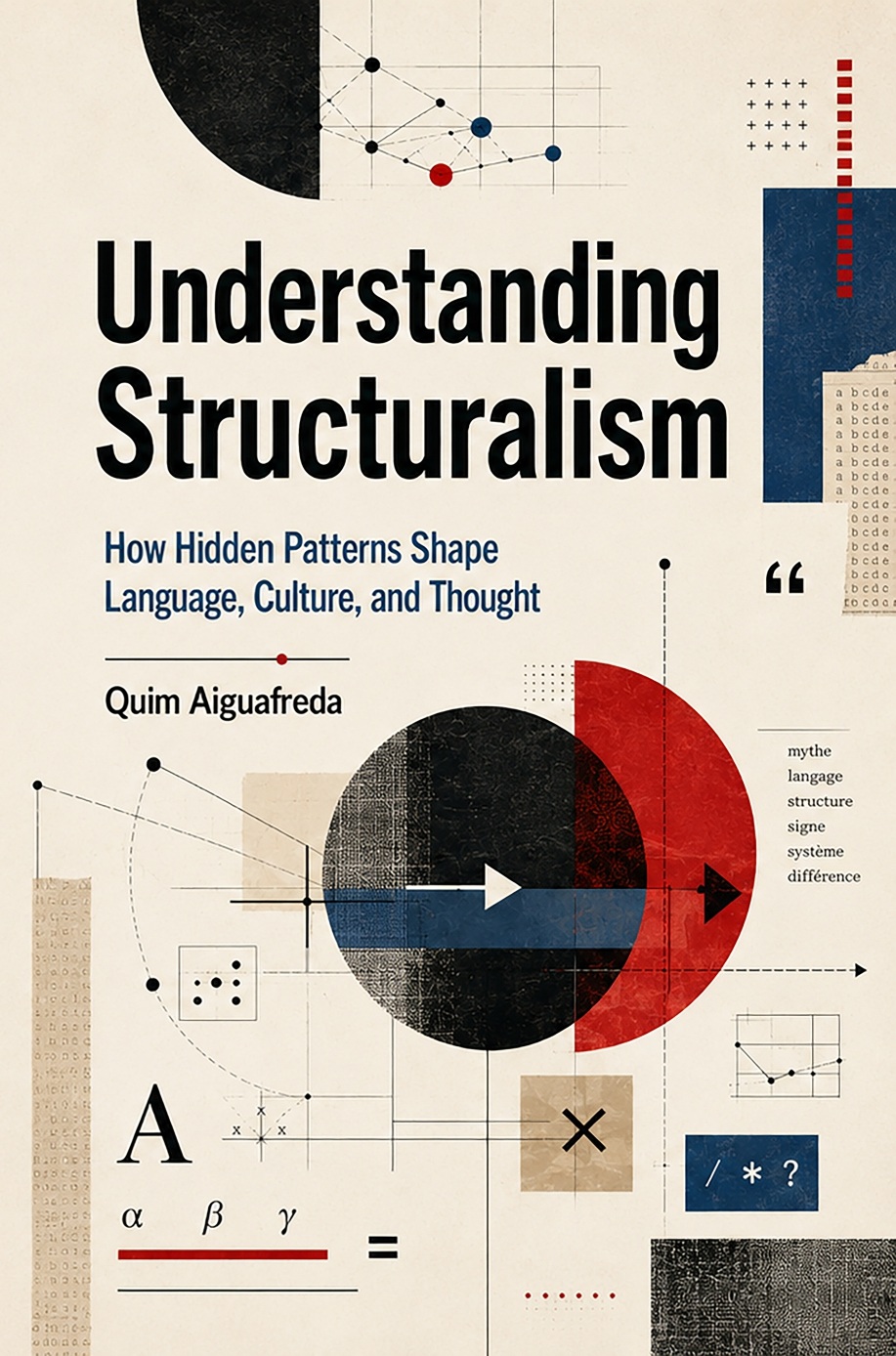
Speculative Realism Made Simple
Objects, Reality, and the World Outside Us
Speculative realism begins with a simple, offensive idea: reality does not exist merely as something for humans to experience, interpret, use, fear, admire, or turn into a conference panel.
For centuries, philosophy has often treated the human-world relationship as the main event. What can we know? How do things appear to us? How does the mind shape experience? All very respectable questions, naturally. But what about the world that existed before humans arrived? What about objects that exceed our uses of them? What about fossils, stars, bacteria, machines, oceans, algorithms, climate systems, and all the other nonhuman things that continue behaving as if they were not waiting for our permission?
This book introduces speculative realism in clear, accessible language, without requiring the reader to have spent ten years trapped in a philosophy department. It explains the central ideas behind Quentin Meillassoux, Graham Harman, Ray Brassier, and Iain Hamilton Grant, along with related movements such as object-oriented ontology, new materialism, actor-network theory, and ecological thought.
Along the way, it discusses correlationism, the thing-in-itself, ancestrality, contingency, withdrawn objects, vicarious causation, nihilism, scientific realism, extinction, nature, technology, and the difference between what is real and what is merely known. It also spends a suspicious amount of time worrying about tables, because philosophy has never met furniture it could leave alone.
Written for curious readers rather than specialists, Speculative Realism Made Simple: Objects, Reality, and the World Outside Us is a dry, sharp, and readable guide to one of the most provocative turns in contemporary philosophy.
- Author
- Quim Aiguafreda
- Published
- June 27, 2026
- Pages
- 196
- Language
- English
- ISBN
- 979-8184608525
From the opening pages
This may seem obvious. You are a modern, sensible person. You presumably do not believe that the Moon vanishes when nobody checks on it, that mountains require emotional validation, or that bacteria wait for a committee of humanities graduates before deciding whether to multiply. And yet a surprising amount of modern philosophy has behaved as though reality only becomes philosophically respectable once it is filtered through human thought, human language, human experience, human culture, human politics, human anxiety, or some other charmingly overfunded human activity.
Speculative realism begins by finding this suspicious. Not false in every case. Not stupid in every form. Just suspicious. It asks why philosophy became so nervous about speaking of reality itself. Not reality-for-us. Not reality-as-described-by-us. Not reality-as-it-appears-to-consciousness. Reality. The thing we are inside, made of, affected by, and eventually returned to, with the usual lack of ceremony.
The phrase “speculative realism” became associated with a particular philosophical moment in the early twenty-first century. On 27 April 2007, a workshop called “Speculative Realism: A One-Day Workshop” took place at Goldsmiths, University of London. The four central figures were Ray Brassier, Iain Hamilton Grant, Graham Harman, and Quentin Meillassoux. As origin stories go, this is less dramatic than lightning striking a castle, but philosophy has always had to work with what it can afford. The important point is that these thinkers were not founding a neat school with uniforms, slogans, and a compulsory newsletter. They disagreed with each other too much for that, which is how one knows philosophers are nearby. What they shared was a dissatisfaction with the idea that philosophy should only talk about the relation between humans and the world, rather than the world beyond that relation.
Contents
8 chapters
The Horrifying Possibility That Reality Does Not Need Us
- Welcome to the Universe, Please Stop Standing in the Way
- Philosophy: The Ancient Art of Making Tables Suspicious
- The Human Bubble
- Correlationism: Reality and Thought, Tragically Linked
- Kant: The Bouncer at the Door of Reality
- The Thing-in-Itself, or Reality Wearing Sunglasses Indoors
- The World Before Humans: An Awkward Detail
- Fossils: Reality’s Passive-Aggressive Notes
Speculative Realism Arrives, Late but Confident
- What “Speculative” Means, Since Nobody Ordered a Crystal Ball
- What “Realism” Means, Against All Recent Advice
- Speculative Realism in One Sentence, Then Several Less Convenient Ones
- A Movement, Not a Club With Matching Jackets
- The Enemy Is Not Humans, Just Our Need to Be Special
Quentin Meillassoux and the Universe Without Permission
- Meillassoux: The Philosopher Who Asked About Dinosaurs and Meant It
- Ancestrality: The Time Before Anyone Was Around to Be Impressed
- The Arche-Fossil: Evidence From Before the Audience Arrived
- Contingency: The Universe Shrugging
- Why This Is Not Just “Anything Can Happen,” Calm Down
Graham Harman and the Secret Lives of Objects
- Graham Harman: Objects All the Way Down
- Object-Oriented Ontology: No, It Is Not About Programming
- Objects Withdraw, Because Even Tables Need Boundaries
- The Table Is Not Your Table
- Relations Do Not Exhaust Things
- Vicarious Causation: How Things Touch Without Fully Touching
- Why OOO Loves Weird Examples
Ray Brassier and the Cheerful Void
- Ray Brassier: Congratulations, the Universe Does Not Care
- Nihilism: Not Teen Sadness, More Like Cosmic Accounting
- Science Without Comfort Blankets
- Extinction: The Final Peer Review
Iain Hamilton Grant and Nature Being Much Too Productive
- Iain Hamilton Grant: Schelling Returns, Nobody Is Ready
- Nature Is Not Wallpaper
- Becoming Before Being
The Wider Object-Reality Circus
- New Materialism: Matter Gets Tired of Being Called Passive
- Actor-Network Theory: Humans, Door Closers, and Other Political Animals
- Ecology: The Planet Answers Back
- Technology: Objects Making Objects Making Problems
Leaving the Human Bubble
- The Difference Between “Real” and “Known”
- The Final Insult: The World Goes On